1
Upload
Turn what you already have into a course
Upload a PDF, PowerPoint or Word document and Gentia turns it into a structured course, keeping your content and your standards intact.

Winner — Best WHS Training Program, 2026 Hunter Safety Awards
Intelligent training
Notice a gap that training can close, and build the exact course that closes it the same day. Written from an expert psychosocial dataset and your own organisational fingerprint, so it is compliant for your jurisdiction and specific to how your organisation actually works.
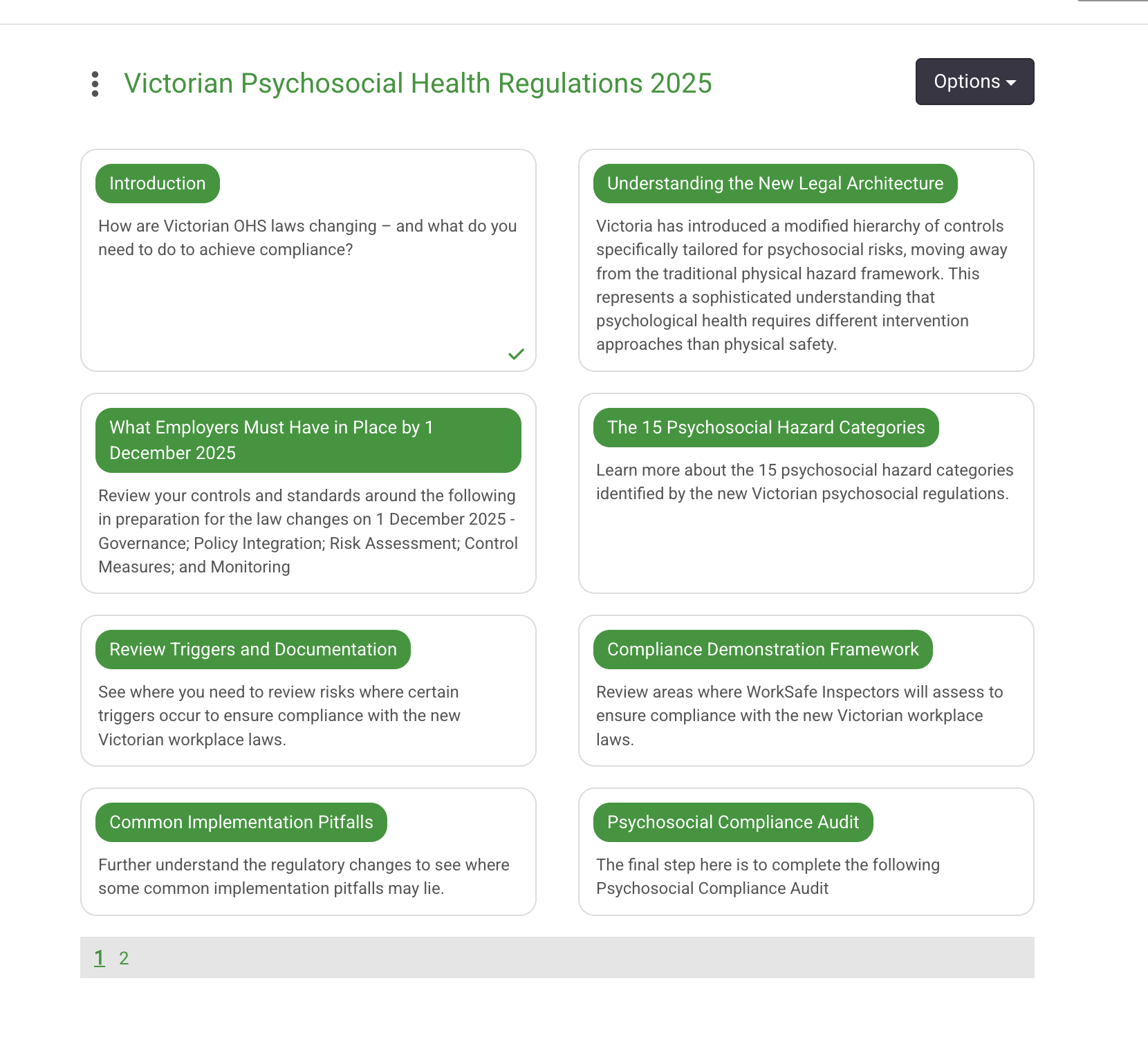
Most compliance training is commissioned, scoped, built and reviewed, and lands a quarter after the risk was identified. By then the team has changed and so has the risk. Gentia removes the gap between noticing and fixing.
Building it
However you start, the course comes out structured, compliant for your jurisdiction, and written against your organisation rather than a generic workplace.
Upload
Upload a PDF, PowerPoint or Word document and Gentia turns it into a structured course, keeping your content and your standards intact.
Describe
Open the training and capability designer, describe the course, and it drafts the lessons, drawing on its expert psychosocial dataset and your organisational fingerprint.
Select
Choose from Gentia's library of psychosocial and compliance courses. AI assistants interpret the material against your fingerprint, so a standard course still lands as a specific one.
Every course carries the legislation it was written against, for the jurisdiction you selected.
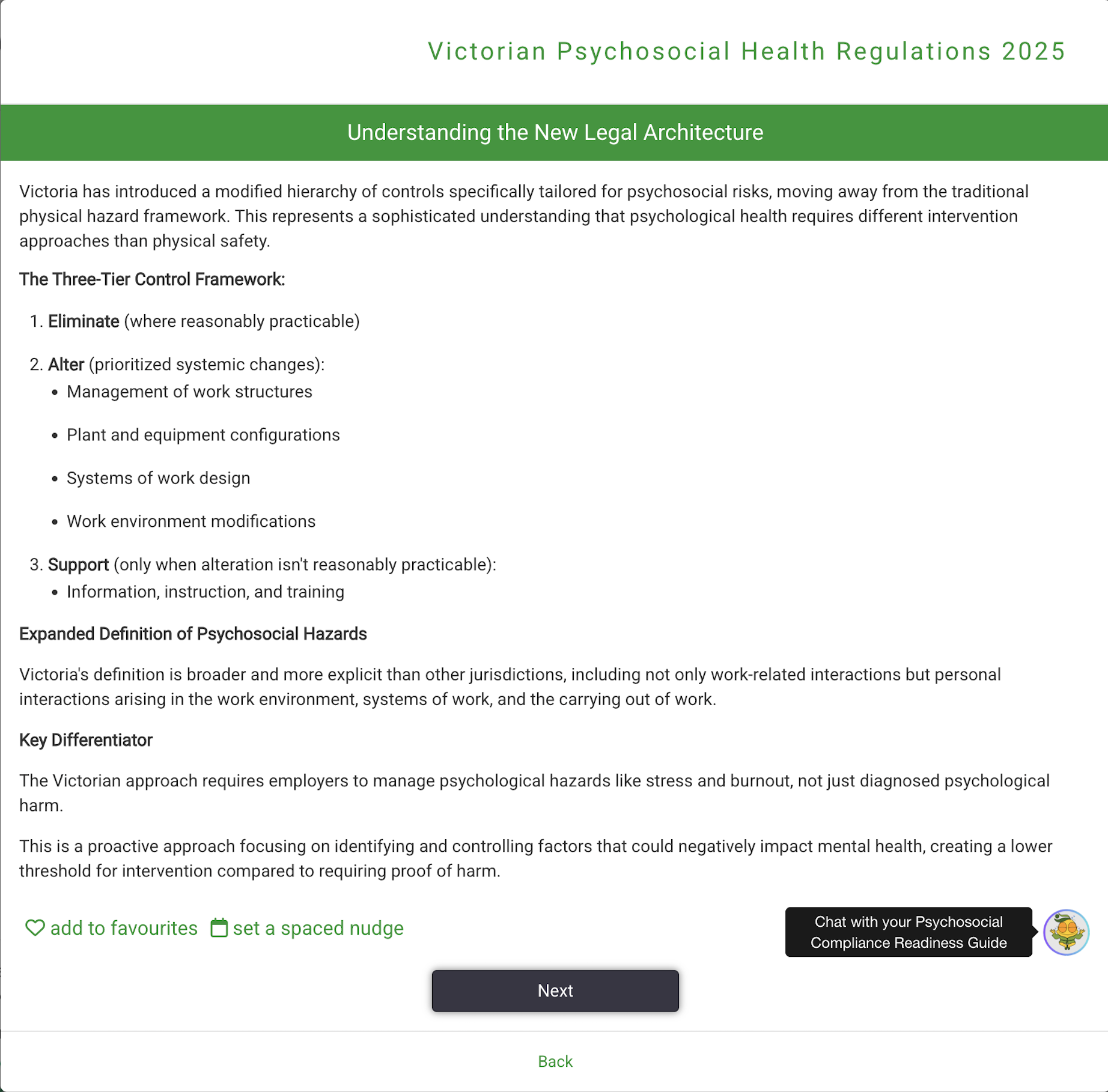
How people learn it
There's no fixed path through a Gentia course. A learner can tell the assistant how they prefer to learn and skip what they already know. They can ask questions in their own words, request more depth on one point, ask to be quizzed, ask for a summary, or set spaced nudges to bring the material back later.
The assistant also makes the content relevant to the role. A manager and a HR business partner completing the same psychosocial course get the same obligations explained against their own day to day work.
No prompting skill required
That's the reason AI-assisted learning usually fails. The tool is capable and the learner doesn't know what to ask, so they ask something vague and get something vague back.
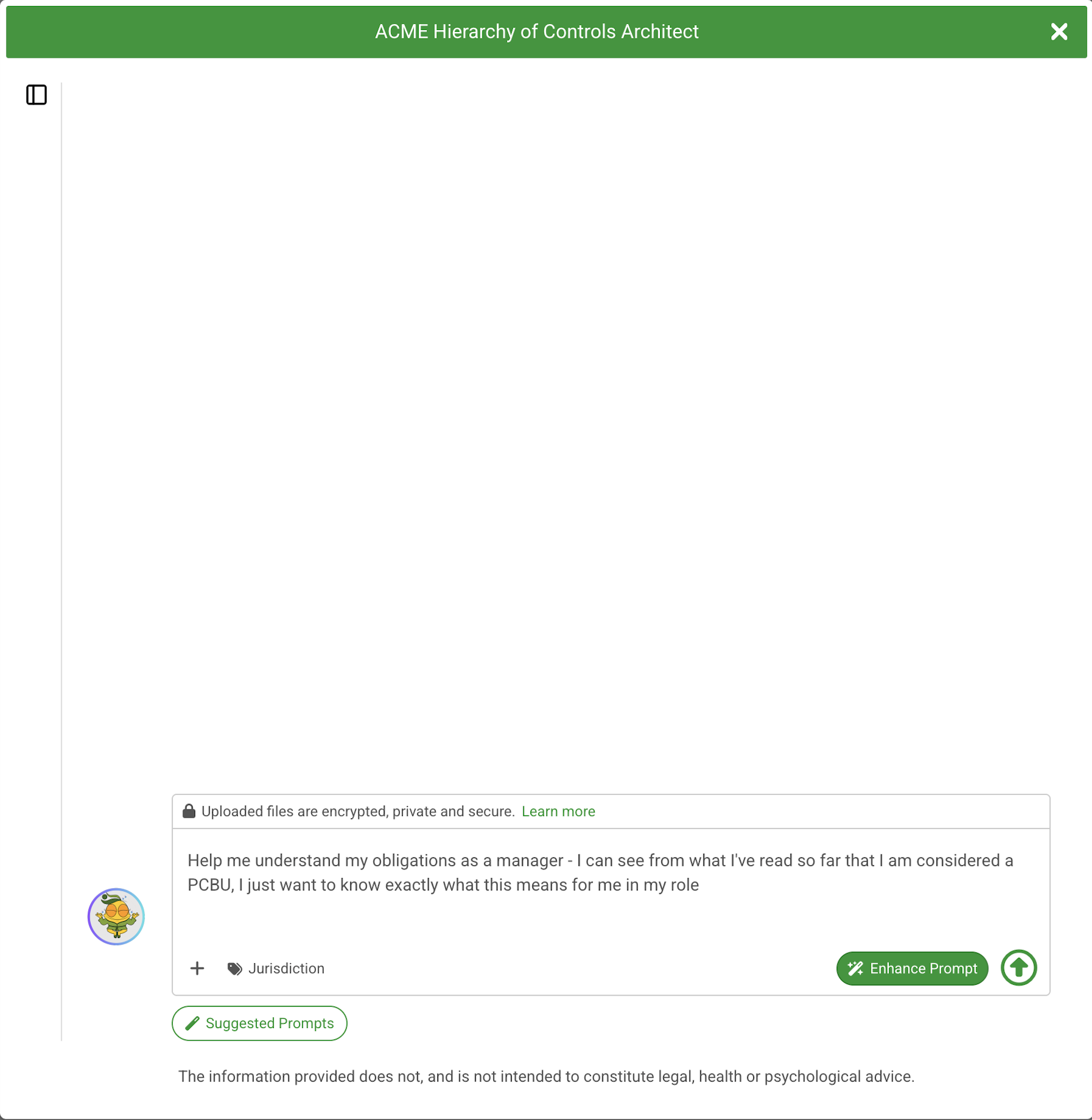
Gentia builds in the scaffolding. Learners can open a prompt library, set a learning focus to narrow the topic, and use Enhance Prompt, which anticipates the missing details, pulls from their learner profile, and structures the request in one click. A learner who has never used AI before still gets a specific answer aimed at their situation.
Deploying and tracking
Training is a control, and controls have to be evidenced. Gentia deploys the course, tracks who completed it, and holds the record.
Send the right course to the right people, by role, site or risk exposure.
New hires receive the training their role requires from day one, without anyone chasing it.
Take a procedure apart and embed the training at the point in the work where it matters.
Short assessments embedded in the course, capturing what people actually understood rather than who clicked through.
Practice and repetition scheduled after the course, so the material returns before it is forgotten.
Regular, data-driven refreshers that keep safety and quality consistent across shifts and sites.
Every user's progress and completions in one searchable record, with certificates issued.
See which groups did not understand what, and build the next course from that, without manual reporting.
AI generated reporting that generates insights from completion data.
Specialist compliance training should come from the specialist system. What people said in a pulse assessment, what they asked the assistant, where the confusion clustered and who has not completed it all flow straight back into your organisational fingerprint.
That means the next risk assessment knows what your workforce understands, the next course is built from the gap the last one exposed, and your training record sits in the same place as the risk register it belongs to.
The fastest way to understand this is to see a course built from scratch, in your jurisdiction, on a hazard you are dealing with now.
Opens your email app, addressed to hello@gentia.ai. Nothing to prepare.
FAQ
Gentia Intelligent Training is a system for building, delivering and evidencing compliance and psychosocial training inside the same platform that holds your risk picture. Courses are generated from an expert-trained psychosocial dataset and your organisation's own workforce fingerprint, delivered with an AI assistant attached to each lesson, and the data captured during training flows back into your organisational record.
An LMS stores and delivers courses somebody else built, and records that they were completed. Gentia builds the course from your own organisational data and the legislation that applies to you, adapts the delivery to each learner, captures what people actually understood through embedded assessments, and feeds that understanding back into your psychosocial risk picture. The difference is that training stops being a separate record and becomes part of your risk evidence.
No. Gentia is not a replacement for your LMS. Our training module is for specialist psychosocial and compliance training, where the content needs to be legislation-accurate and the data needs to sit alongside the risk register. Gentia is designed to sit alongside what you already run, not replace it.
Minutes rather than months. A course can be generated from an uploaded document, from a description given to the training designer, or selected from the Gentia library and tailored to your organisation. This matters because it means training can be built in direct response to a gap you have just identified, rather than a quarter later.
Yes. Upload a PDF, PowerPoint or Word document and Gentia turns it into a structured course, preserving your content and standards while adding the lesson structure, assessments and AI assistance.
Courses are written against the psychosocial regulations and codes of the jurisdiction you select, with the relevant provisions reflected in the content. Gentia covers New South Wales, Victoria, Queensland, South Australia, Western Australia, Tasmania, the Australian Capital Territory and the Northern Territory. Changing the jurisdiction changes the course.
Every lesson has an assistant attached that reasons across the course content, the expert psychosocial dataset and your organisational fingerprint. Learners can ask questions in plain language, request more depth, ask to be quizzed or assessed, ask for a summary, or skip material they already know. The assistant explains the same obligation differently depending on the learner's role.
Enhance Prompt is a one-click feature that structures a learner's question for them. It anticipates the details they have not supplied, draws on their learner profile, and rewrites the request so it returns a specific answer. It exists because most people have never been taught to prompt an AI, and a vague question is the main reason AI-assisted learning disappoints.
Yes. Two people completing the same course receive different explanations, examples and depth, based on their role, their day to day work and how they have told the assistant they prefer to learn. The obligations covered stay the same. How they are taught does not.
Completion and progress, results from pulse assessments embedded in the course, and aggregate patterns in where learners needed more explanation. This shows which groups understood what, rather than only who clicked through, and it identifies the gap the next course should close.
Yes. That is the central design decision. Understanding captured during training updates your organisational fingerprint, which means your next risk assessment reflects what your workforce actually knows, and your training record sits in the same system as the risk register and the controls it supports.
Yes. Courses can be broken into short toolbox talks for regular delivery across shifts and sites, and spaced nudges can be scheduled after a course so material returns before it is forgotten. Both are recorded in the same completion history.
Yes. Progress and completions for every user sit in a single searchable record, certificates can be issued, and the training record forms part of the evidence trail alongside the risk assessments and controls it relates to.