Stop Telling People to Use AI. Start Designing How
Why the mandate to "use AI" is backfiring, and why better work design is the key.
Gentia · 8 July 2025
AI was supposed to make work easier. That was the promise. Less admin, less repetitive effort, more space for thinking, judgment, and better decisions.
But inside a lot of organisations, the opposite is happening. Work is not getting lighter. It is getting louder, faster, and more cognitively demanding.
The reason is not that AI has no value. It's that most organisations have rolled it out like an extra layer instead of treating it as a redesign challenge.
They've kept the same meetings, the same approval chains, the same reporting habits, the same handoffs, and the same communication overload. Then they added tools that can generate more drafts, more summaries, more options, and more things for someone else to review. The volume of activity rises, but the quality of work does not necessarily rise with it.
That is why so many leaders are confused right now. They expected a productivity lift, but what many teams are experiencing instead is brain fry, decision fatigue, and an increasing sense that the workday has become harder to think inside.
The problem is not AI. It is what we layered it on top of
When leaders tell people to use AI more, it often sounds sensible. It sounds modern. It sounds like progress. But it is also vague in a way that creates all sorts of unintended consequences.
If you do not redesign how work happens, AI does not remove friction. It multiplies it.
People produce more material because the tools make it easy. More ideas. More summaries. More analysis. More first drafts. But none of that removes the need for human judgment. It just shifts the burden. Instead of spending time creating from scratch, people now spend more time reviewing, correcting, filtering, checking, and second-guessing what the machine produced. The work has changed shape, but it has not necessarily become easier.
That helps explain why so many teams feel busy in a new way. They are not just doing their jobs. They are also monitoring AI outputs, deciding what to trust, repairing weak outputs that look polished on the surface, and trying to work out when they should rely on the tool and when they should override it.
That is real cognitive labour, and most organisations have not accounted for it.
The data is telling a very different story from the hype
One of the clearest signs of this comes from ActivTrak's analysis, reported in the Wall Street Journal. In a study of 164,000 workers across more than 443 million hours of digital work activity, there was not a single activity category where AI saved time.
+104%
email time
+145%
messaging
−9%
focused work
That is not the profile of work getting lighter. It is the profile of work becoming denser and more interrupted.
That matters because it cuts right through the rhetoric that AI naturally frees people up for higher-value thinking. It doesn't do that on its own. If anything, when organisations simply bolt AI on top of existing workflows, the tools can accelerate output while making concentration harder to sustain. People are left with more information to process, more communication to manage, and less uninterrupted time to think clearly.
This is exactly the trap many organisations have fallen into. They've sped up activity, but they haven't sped up decisions. They've made it easier to generate work, but they haven't made it easier to resolve work. So teams end up with more motion, more noise, and more cognitive drag.
Brain fry is what bad AI design feels like
The Harvard Business Review and BCG "brain fry" study puts language around what many people are already feeling. It found that 14% of AI-using workers are experiencing brain fry, a form of mental fatigue linked to the constant oversight AI requires.
+33%
decision fatigue
+39%
major errors
+39%
intent to quit
Reported by workers experiencing brain fry.
That should concern any leader who is still treating AI as a simple productivity tool. Because what this points to is not resistance to change. It points to a work design problem. When people are asked to juggle multiple AI tools, review a growing volume of machine-generated content, and remain accountable for quality without clearer workflows or decision rights, mental fatigue is not a side effect. It is the predictable outcome.
This is also where a lot of organisations misread what is happening. They see faster output and assume the system is working. But faster output is not the same thing as better work. In many cases, people are producing more while thinking less clearly, collaborating less effectively, and spending more time managing the by-products of AI than solving the actual problem in front of them.
Most organisations are still taking the wrong approach
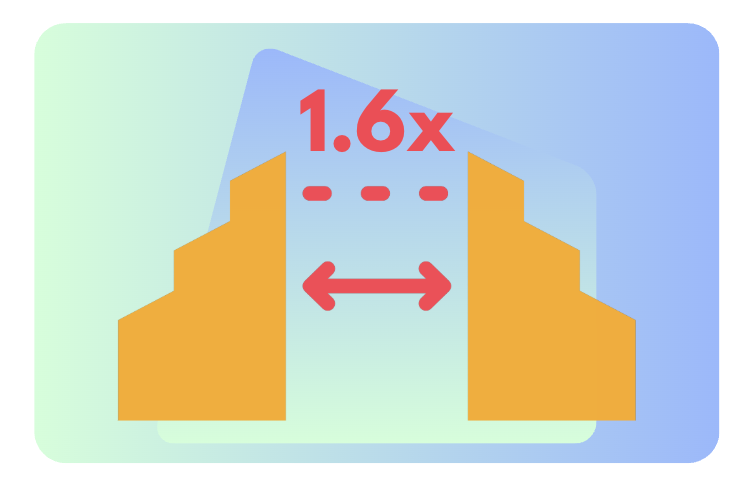
Deloitte's 2026 data makes the pattern even clearer. It found that 59% of organisations are taking a tech-first approach to AI, and those organisations are 1.6 times more likely to miss expected returns than those taking a human-centric approach.
That's a big gap, and it tells us something important. The organisations struggling with AI are not struggling because the tools are weak. They're struggling because they're treating AI as a software rollout instead of a redesign of work.
Deloitte also found that 66% of leaders say designing human and AI interaction is important, but only 6% say they're doing it well. That gap between what leaders know and what they're actually building is where a lot of the current pain sits.
Most leaders can see that AI changes more than output. It changes trust. It changes decision-making. It changes ownership. It changes how teams coordinate and where judgment needs to sit. But many organisations are still acting as though adoption is mainly about training people to use the tools.
It is not. You cannot train your way out of poor workflow design.
You cannot prompt your way out of a broken decision process.
The telecoms example says everything
There is a Deloitte case study that captures this perfectly. A European telecommunications company added an AI expert into customer service without changing roles or workflows. The result was a 5% productivity lift.
Then it took a different approach. It dedicated 90% of the rollout budget to redesigning how humans and AI actually worked together, including workflows, trust thresholds, escalation paths, and training.
+5%
productivity, from adding AI to existing work
+30%
productivity, from redesigning how humans and AI work together
Same broad technology direction. Completely different result.
That's the distinction leaders need to take seriously. One approach added AI to existing work. The other designed how work should change because AI was now part of it. That is where the gains came from. Not from the tool itself, but from the decisions around how people and AI would interact.
This is where cultural debt starts building
There is also a deeper cost when organisations get this wrong. Deloitte calls it cultural debt, and we think that phrase is useful because it names the quiet tax a lot of teams are already paying. When AI is introduced without clear norms, clear decision rights, or open conversations about what good work now looks like, trust starts to erode in subtle ways.
People become less sure what counts as effort. They become less confident about when to challenge an output that looks polished but feels off. Managers hesitate to override something because the machine sounds certain. Teams spend more time reviewing generated material and less time thinking together. Some people start using AI to look more productive, while quietly passing rework and cognitive load downstream to colleagues.
None of this shows up neatly in an adoption dashboard. But it shows up in the human system around the work, and that is where AI succeeds or fails in practice.
The real question leaders should be asking
The wrong question is: how do we get people to use AI more?
The better question is: what do we need to redesign now that AI is part of the way work gets done?
That means asking harder, more specific questions.
Where should human judgment stay firmly in the loop?
What decisions need clearer ownership?
What work should disappear altogether, rather than simply speed up?
Where are we creating more review and rework instead of less?
What norms do teams need so they can challenge AI without awkwardness or silence?
Are we measuring whether decision quality is improving, not just whether output volume is increasing?
Those are not technical questions. They're leadership questions. They're work design questions. And they're the difference between AI creating value and AI quietly creating drag.
Stop issuing the mandate. Start designing the system
The organisations getting real leverage from AI are not simply telling people to use it more. They're redesigning how work happens, clarifying ownership and reducing handoffs. They're making it easier for people to know when to trust the machine and when to challenge it. They're paying attention to what AI is doing to trust, judgment, and collaboration, not just what it is producing.
That is the shift more leaders need to make now. Stop treating AI adoption as the goal. Adoption is not the goal. Better work, better decisions, stronger teams and useful collaboration are the goal.
You cannot redesign what you have not observed
There is one practical obstacle in the way of all of this, and it is worth naming plainly.
Redesign requires knowing what to redesign. Most organisations do not have that picture. They know their licence count and their pilot list. They do not know where people are quietly repairing weak outputs, where verification has become a second job, where judgment is being overridden by a confident-sounding answer, or where the conditions around the work make good use impossible no matter how capable anyone is.
A survey will not get you there either, because it asks people to report on habits they have not examined and hesitations they have never said out loud.
So you have to watch what actually happens instead.
That is what the AI Readiness Experiment does. It puts people on a real work problem for ten days, using AI, under real constraints, and records what happens: where AI creates genuine value, where it creates rework and checking burden, where people struggle to verify an output, and where human judgment steps in or quietly gives up.
It also surfaces the conditions underneath. The problems people choose to work on are themselves evidence, and across a cohort they reveal recurring patterns in workload, role clarity, workflow, support and decision-making — the exact things a redesign has to address.
That is the difference between the 5% and the 30%. Not the tool. The design. And you cannot design it from a dashboard.
That is where the leverage has been the whole time.